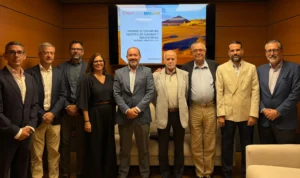
Article published by José Alberto León Alonso in El Día on 11/15/15.
In the book Why Nations Fail, by Acemoglu and Robinson, the authors conclude that countries grow economically if they are able to create “well-designed institutions that, politically, guarantee participation and pluralism.” Otherwise they end up stagnating, hence the economic importance of the analysis of institutions. The gap between the current configuration of the Senate and the legal-political reality of the State of the Autonomies makes undertaking its reform unavoidable, as it constitutes a clear example of a poorly designed institution.
In every politically decentralized State, a body is necessary to structure the levels of government in which public power is articulated, a body through which the participation of territorial entities in the general policy of the State is possible, which facilitates territorial integration and cooperation and promotes solidarity. Our current Senate is not that body. Ciudadanos has proposed abolishing the Senate and creating a Council of Presidents of the Autonomous Communities (CC.AA.). They propose that they participate effectively in the government of the nation through the Presidents of Communities, with a vote weighted according to the population of the respective Community, and that they be competent to approve, in second reading, with the majority vote of its members, the laws most directly related to the territorial organization of the State. In case of discrepancy with the Congress of Deputies, what was decided by it would prevail.
I agree with Ciudadanos on the need for Senate reform. However, I disagree with the solution of a Council of Presidents. My proposal, which can be found developed in my book A territorial reform for Spain, proposes creating a new body with new functions and a different composition from the current one, which I would call the Council of Autonomies, similar to the German Federal Council (Bundesrat) that represents the länder, or the Swiss Council of States, where the executives of the cantons are represented. The Council of the Autonomies would be the link that would unite the State and the Autonomous Communities as it should ensure that, despite the division of tasks, the current opposition found between the State and the autonomies is not reached. It would be made up of representatives of the Autonomous Communities, although not only their Presidents who, honestly, I do not believe that they stand out for their virtues as legislators. Each region would have three representatives and one more for every two million inhabitants, which would total a very operational Plenary of just 70 members in which, depending on the issues to be discussed, any member of the autonomous governments could participate, who would therefore have a double function: they would simultaneously hold a position in their Autonomous Community and another in the State, assuming vast political responsibility. They would be both regional and national politicians, which would help them change the mentality of constant confrontation with the State and its institutions, which they see as something alien. Their activities in the Council would not be paid, since they already receive money from their Autonomous Community.
The Council would meet in public plenary session generally every three or four weeks, although there would be a permanent commission and other techniques between sessions. Each motion would be debated first in the commissions, which would be attended by the Directors or General Directors of the branch, and even officials from the departments who would act on behalf of them, analyzing the motions. Unlike the Ciudadanos proposal, the President of the Government and the Ministers would have the right to participate with voice but without vote in the sessions and even send delegates, that is, officials from the Ministries, so that the respective experts from the State Executives and the Autonomous Communities would fluidly exchange good practices and information of all kinds, facilitating their necessary cooperation. So part of the constant dialogue and cooperation between the State and the Autonomous Communities would take place in them, which is so needed.
The functions of the new Council of Autonomies would be limited to the regulations of regional interest, so that only these would have to be sent to the Council, while the rest would be approved directly in Congress, accelerating its processing. Thus, the Council of the Autonomies would not exercise the control function of the Government, which would correspond exclusively to Congress, since it is in that chamber in which the citizens and popular sovereignty would be represented, since the autonomous governments would be represented in the Council, not the people. Nor would they participate in the approval of laws under the exclusive jurisdiction of the State.
In addition to the rules of regional interest, the Council should approve the constitutional reforms, which in all decentralized countries require the approval of the territorial chamber, as well as designate regional representatives in the Spanish delegation to the EU, to participate in European negotiations on matters of their concern. The Council could not modify the laws coming from Congress, but only approve or reject them. But if it were to reject them, Congress would have to lift the autonomous veto with a qualified majority of the same degree (simple, absolute or reinforced) as that which opposes it in the Council. In this way, the opinion of the Council could not be constantly ignored, unless the majority of Congress was as qualified as that of the Council.
In general, the Ciudadanos proposal seems like a good idea to me, although with the aforementioned tweaks. The current Senate has not served to resolve territorial tensions, not even to debate them, and it is necessary to articulate the participation of the Autonomous Communities -as parties- in the process of formation of the will of the State -like everything-, to avoid the current institutional disaffections and disloyalties.
U!