Energy taxation in the Canary Islands
With the preparation of this work, Corporación 5 has the aim to provide objective data that helps explain the current situation of energy taxes in the Canary Islands and reflect on possible future scenarios.
Continuing with the philosophy of previous editions of Papeles de Economía Canaria, the objective of this issue focuses solely on carrying out the diagnostic work of the current and future situation, without trying to provide possible solutions or recommendations on the policies to be implemented for the future.
On this occasion, thanks to the collaboration of Cepsa, the sixth edition of Papeles de Economía Canaria is presented.
CONCLUSIONS I
- The Energy taxation arises as a solution to compensate and correct the negative effects that energy can produce on the population and the environment. For this reason, it constitutes a branch within environmental taxation.
- The Spanish energy policy is framed within the European strategy and has the following goals by 2030: 23% reduction in greenhouse gas (GHG) emissions compared to 1990, 42% of renewable energy in total final energy consumption, 39.5% improvement in energy efficiency and 74% of renewable energy in electricity generation.
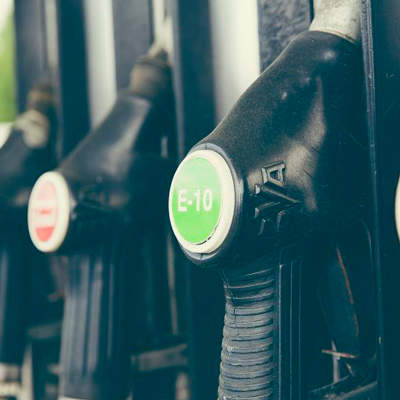
- The Energy taxes play a determining role in the daily decisions of households. For example, fuel taxes in Spain represent 49-54% of the retail price.
- The energy taxation of the Canary Islands has certain specificities regarding national taxation.
- The Energy collection in the Canary Islands has increased by 48.5% between 2002 and 2020, going from 274 million euros to 406.8 million, according to the PGCAC 2020.
CONCLUSIONS II
- The collection of fuel tax has lost relative importance within energy taxes (-6 p.p.), while that of electricity has increased (4 p.p.) between 2002 and 2020.
- The tax on fuels derived from petroleum represents 4.5% of the public income of the Canary Islands, with a collection of 350.5 million euros. While the electricity tax represents 0.61% of the public income of the Canary Islands, with a collection of 47.1 million euros.
- He special tax on certain means of transport represents 0.12% of public income in the Canary Islands, with a collection of 9.2 million euros.
- The expected increase in The total number of electric vehicles in circulation would have implications at the tax collection level for the Canary Islands: The collection of the Tax on electricity would increase while the collection of the Tax on fuels and, given that the IGIC of these vehicles is lower than that of diesel or gasoline vehicles, it would be reduced in this way. In fact, on an annual average and according to estimates made by Corporation 5, the collection of Fuel Tax and the Levy on Automotive Fuel Consumption for lower use and greater efficiency would decrease by 2.9% annually, while that of Canary Islands General Indirect Tax would fall by 0.1% annual. On the other hand, the collection of Registration Tax, and Special Tax on Certain Means of Transportation would be reduced by 1.5% annually. On the contrary, the collection of Electricity Tax would increase by 0.4% annually.
REPORT
For more information, access the full report here: